|
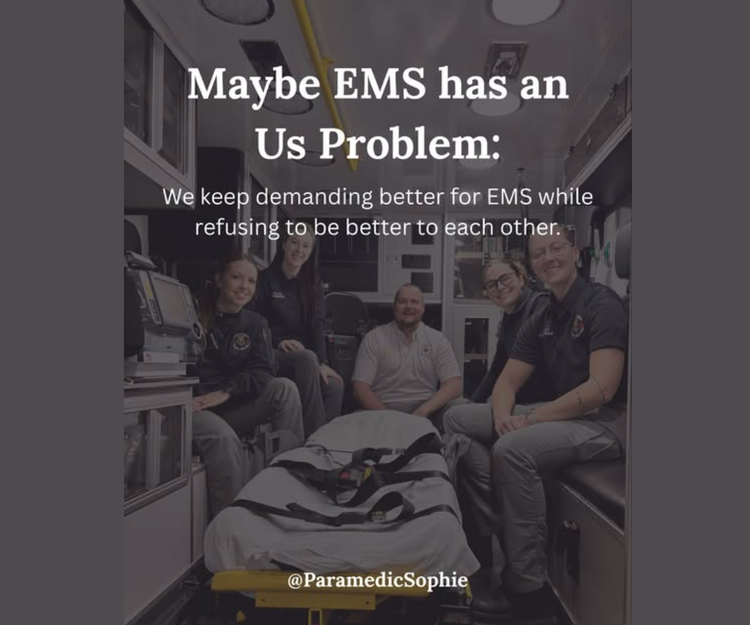
We keep fighting for the profession to move forward while tearing apart the people trying to move it. We spend a lot of time talking about everything that needs to change in EMS. Pay, education, reimbursement, leadership, scope of practice, recognition. We want EMS to grow and finally be treated like the profession we know it can be. But I think at some point we also have to look inward, because we are absolutely stunting our own growth with the way we treat each other. It’s generation against generation. Shift against shift. Fire against third service. BLS against ALS. Ground against flight. Men against women. Experienced providers against new providers. We have become incredibly comfortable treating the people standing beside us like they’re the competition instead of the people we’re supposed to be building this profession with. And there’s actual data behind this. A study published in Prehospital Emergency Care looked at workplace incivility among nationally certified EMS professionals. Of the 2,815 respondents included in the analysis, 47.4% reported experiencing incivility from coworkers or supervisors at least once a week. Regular exposure was associated with higher stress, dissatisfaction with EMS and the workplace, intentions to leave their job or EMS altogether, and increased workplace absence. Almost half of the people in that study were dealing with this at least weekly. So maybe this isn’t a “people are too sensitive now” problem. Maybe it’s a workforce problem. You cannot constantly beat the shit out of your own people and then act surprised when good providers decide they don’t want to do this anymore. But I also don’t think EMS is doomed. I think most of us actually want the same things. We want to be good at this job. We want partners we trust. We want to take good care of people. We want EMS to be better than it was when we found it. And doing better really doesn’t have to be complicated. Teach the new medic without humiliating them. Listen to the experienced medic without automatically assuming they’re outdated. Bring new evidence without using it as a weapon to prove how smart you are. Admit when you don’t know something. Give the other shift the benefit of the doubt. Stop making people prove over and over that they belong here. Experience and progress can sit in the same ambulance. We can disagree. We should disagree sometimes. That’s how medicine gets better. But disagreement and disrespect are not the same thing. Be the partner people aren’t afraid to ask questions around. Correct people without belittling them. Give credit freely. Apologize when you screw up. Defend people who aren’t in the room. Leave the next generation something better than what was handed to you. And maybe most importantly, stop waiting for “EMS culture” to change like it’s some separate thing happening around us. We are the culture. Every station, every truck, every classroom, every comment section, every interaction with the brand-new EMT who doesn’t know what you know yet. We can keep fighting for better pay, education, legislation, equipment, and recognition. But we should be fighting just as hard to build a profession people actually want to stay in. EMS can be better. We just have to be better to each other. Cash RE, White-Mills K, Crowe RP, Rivard MK, Panchal AR. Workplace Incivility Among Nationally Certified EMS Professionals and Associations with Workforce-Reducing Factors and Organizational Culture. Prehospital Emergency Care. 2019;23(3):346–355. PMID: 30118629.
|